On Things I Thought I Knew

Connecticut, January 2020.
I remember the worksheets we were assigned in the first or second grade. We had to identify whether a statement was fact or opinion. “The population of the world is 7 billion.” Fact. “Tuesday comes after Monday.” Fact. “Pink is a pretty color.” Opinion. As we grow up, the number of things that we know evolves and our opinions become more intricate and although the distinction between the two should become second nature, it seems as though the opposite is true. That never again will facts be as easy to discern as they once were on those worksheets from my childhood. That the line between fact and opinion overtime blurs, like trying to ascertain the original colors of paints that have been mixed. Somewhere, in the ever-narrowing gap between fact and opinion, the world becomes contorted and recolored, as if it is being viewed through the lens of a kaleidoscope until all that is left is series of our impressions. In this way, our accounts of the world become more like shadows, colorless outlines filled with the things we think we know.
I started noticing the fallacies in my own knowledge very early on in the pages of old, discarded journals, where I found myself titling entries: “Things I Know Now”. “I feel lonely.” Fact. “I want to be a lawyer when I grow up.” Fact. “I like to read.” Fact. Now, these same statements play more like the game two truths and a lie, than they do an accurate reflection of my own self-understanding. These are just some of the things I once thought I knew about myself. But it was to these “facts” that my sense of self began tethering, like weeds sprung out of cement climbing the rusted post of an old chain-link fence. “It's what we think we know that keeps us from learning.” (Claude Bernard) If my own self-judgment was this impaired, this reliant on facts distorted by some opinion—either my own or somebody else’s probably with regards to what success looked like or what popularity meant or what I “should be doing”-- then I could only begin to guess how impaired my sense of the world was.
How many times have I sat through a conversation preparing my response to a comment or story whose ending I thought I knew? How many arguments had I gotten into over the details of a history I thought I knew? Or, worse yet, how many conversations had I avoided completely because of my misconceptions of a person I thought I knew? How many times had I sat in solitude and deliberated or scrutinized a version of myself I thought I knew? What I have found is that the moment we become complacent in the things we think we know is the moment we concede our identities and those of others to certain ignorance.
Increasingly, my mind has been turning to a conversation that I had with a mentor, turned friend, a few years ago over coffee. I have decided that all good and honest conversations are had over coffee. Opinion. He was telling me a story about reciprocity, and its subversive significance in our everyday. Once, after a dinner party to which my friend was invited by a couple he knew from work (it would be important to mention here that this friend is 80 years old), he was struck by the couples’ deep and overt analysis of reciprocity over the course of the dinner. “In the conversation you had with Mrs. Smith, what do you think was the rate of reciprocity?”, the woman asked her husband from the passenger seat of their car, in which my friend sat in the back. “I think it was about 20-80” her husband replied, “I spoke about 20 percent of the time, mostly asking her questions, and she responded 80 percent of the time, mostly about herself.” And so on and so forth, the couple went down the list of the people with whom they spoke at dinner, quantifying reciprocity. I find myself returning to this story often, turning it over in the back of my mind in the moments before and after any conversation with anyone. Reciprocity is a vehicle by which we are no longer hindered by the things we think we know.
What place does any of this have on a blog that is primarily about food? Here I reiterate that you learn a lot about a person when you share a meal together, that reciprocity is most easily quantified over dinner or coffee. But there is also the argument to be made that food and knowledge serve the same purpose: to enhance our understandings of the world, to color within the lines of our impressions, to allow us to connect with one another well beyond the smokescreen of the things we think we know, to tether ourselves to something concrete and beautiful.
On Becoming

As the sun starts to set on this phase of my life, in which I find myself back home in my early twenties, I can’t help but wonder what is to come.
I am sitting at the desk in the corner of my childhood bedroom amidst the clutter of my youth—old soccer trophies that are rewarded to every participant in the league under the guise of fairness, the flower crown with long-dead roses that I wore at my high school graduation, a photo of me with my grandmother from when I was five—and I am trying to pinpoint the moment that I stopped using the phrase “when I grow up” under the misguided presumption that I had already done so. The question, “what do you want to be when you grow up”, was most frequently asked of me when I was a kid, in a way that connoted endless possibility. Now all around me it feels as though my peers have the types of answers to that question that are as succinct and direct as the path on which they find themselves. Their paths seem unhindered by the sense of impossibility which increasingly overwhelms me. “When we lose that sense of the possible we lose it fast” (Joan Didion). Where the coronavirus has taken me out of the regular goings on of my early twenties and placed me back in the setting of my childhood, I have had the unique opportunity to reexamine my life through the lens of the person who used to occupy this space, my younger self. Sitting here, at the desk in my childhood bedroom, where I have spent most of the last four months, I find myself reconsidering, what I want to be when I grow up, painfully aware that I have most of growing up still to do.
In the earliest moments of this ongoing effort to figure out what I want to be when I grow up, I found myself in a Fleabag-esque confession expressing to a friend my inclination to find someone who will tell me what to do. This desire rose in me in a similar way that it did for Fleabag, the main character and namesake of the Amazon Prime series—one of the many shows I have been rapidly consuming in quarantine. ”I want someone to tell me what to wear in the morning. I want someone to tell me what to wear EVERY morning” Fleabag shares with the aptly named Hot Priest. And I do want someone to tell me what to wear, especially since my 24-7 pajama routine in quarantine is starting to take a mental toll. But more than that I wanted someone who could tell me what to be once I had gotten dressed and walked out the door and entered into the world, all grown up.
When I relayed this to my friend, she paused and said, “maybe instead of finding someone who will tell you what to do, you should find a person you want to become.” (“Wow, what a wise friend”, you must be thinking. And yes, truly she is.) Implicit in this suggestion is the fact that people hate being told what to do. Just as so much of instruction in school goes unremembered, much of the instruction we get in life goes unfollowed. For so long, I had thought of myself at something of a crossroads, all at once on the precarious cusp of life’s most alluring choices between happiness and money and goodness and passion and hard work and fun. But what I was faced with is that I am not, as they say at a crossroads, or at the entryway to one or another ominous and poorly illuminated paths, but rather in the middle of a desert, a vast and dry expanse, thirsty and appetent to become a composite of everyone I have ever admired.
So often when we are young, we are asked, “what do you want to be when you grow up?” but never is the question “who do you want to be when you grow up?” The thing that the former question neglects that the latter captures is the importance of character and the myriad possible forms character can take. It is in character, not career, that I rediscovered the sense of possibility which I thought I had lost.
Influence is something which we often find ourselves under, like that of drugs or the allure of certain social fads. Although, increasingly, as I have been reflecting on my place in the world, I am coming to understand how I am, in many ways, the product of influence and that, contrary to the popular idea connoted in that flawed colloquialism, it is not something I am under but rather in which I am completely submerged and surrounded. Influence serves as the foundation for emulation, and emulation is the means by which becoming the person we want to be when we grow up is an end. In his book, Between the World in Me, Ta-Nahisi Coates writes “love is an act of heroism. And I could no longer predict where I would find my heroes.” Love as an act of heroism finds good company in acts of honesty, selflessness, vulnerability, good humor, loyalty, and individuality. It is from the people who perform these acts with an everyday ease that we can learn the most. And what I am now coming to understand is that I am, at all times, surrounded by these people, my own personal heroes who I most seek to emulate.
A Dose of Influence: Some of the People I Seek to Emulate

Eliza, me, and Margot circa 2003. They served as the original inspiration for this post and the people who I most seek to emulate.
The vibrant and contagious goodness of my cousin Margot who first encouraged me to start this blog.
The colorful, eclectic, Boho style of blogger Latonya Yvette.
The bravery of the women featured (and not featured) in the Netflix documentary, Athlete A, about the athletes who reported the abuse by Larry Nassar and USA gymnastics.
(Ongoingly) the eloquence and honesty of Joan Didion.
The humor invoked by Dan Levy in Schitt’s Creek. (I literally can’t get enough of this show)
The self-assuredness and contagious positivity of my sister, Eliza.
The intellect of Brené Brown which served as the foundation for how I approach my writing
The unwavering support of my friends, even from a distance.
on the dichotomy of smallness

Yellowstone National Park, 2018
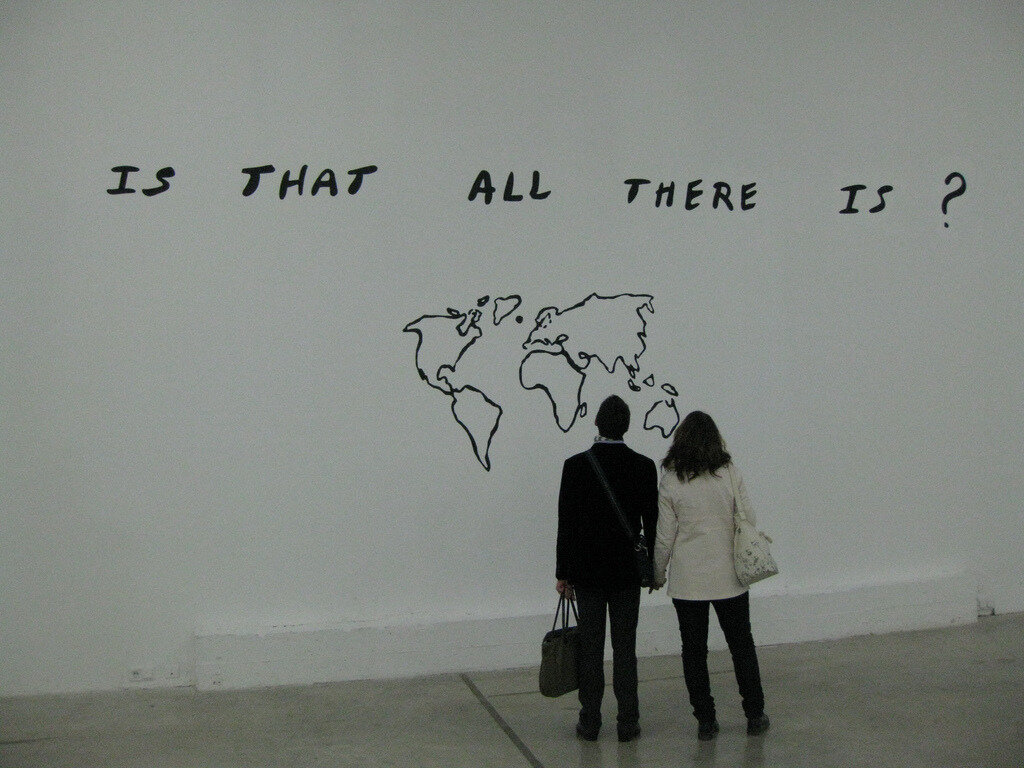
When I was younger I kept a journal, a soft covered yellow composition notebook that had my name scribbled on the front in blue pen. My habit was to either record my day with such a sublime clarity that to read the passage back was to experience it again, or not at all. What is interesting about rereading these passages—which I have recently been doing since I began living again in my childhood home—is not my shocking inability to spell words correctly, but the way in which I was cognizant, even at age 9 or 10, of my own smallness. This was most clearly evident in the way I referenced my hometown, not calling it by its name but referring to it generically as “a corner of the world”, like one in a million dots in Pollock painting. Or the way I wrote about the ocean, “the edge of the world” as it is referred to in the pages of my journal, a recognition that the world, even in its vastness, is still finite. This is also to say that within these microcosms in which I found myself, I felt on an individual level, a distinct sense of smallness.
There is a dichotomy about smallness which I have been stuck on for a while. On the one hand, as per an article posted years ago in the Guardian, “Most of us spend much of our lives trying, in one way or another, to get the world under control, to make reality predictable and explicable and non-intimidating.” Smallness is the means by which we are able to gain a semblance of control. Smallness is the way we approach travel, visiting towns and cities inside of countries, the way we approach literature, piecing together sentences which comprise chapters which make up novels, the way we approach time, the passing of milliseconds. But smallness is also the reason we feel as though we have no control to begin with; smallness is simultaneously the reason that our actions and ideas and words feel as though they have no effect. This is also called, more bleakly, insignificance. In this way, our smallness has the power to suffocate, like spending all your life within the confines of one room that eventually fills with recycled air.
It was in this same journal that I expressed an early eagerness to travel, which was predicated on the misguided and hopelessly naive assumption that it would make me feel less small. Travel, while it shows you possibility beyond your smallness, outside of your own microcosms, doesn’t inherently strip you of your smallness. Years later, when I applied to college, I was again guided by the idea that I would have the power to emerge from my smallness, this time through my education, and “make a difference in the world”, that horribly vague and enduringly naive phrase that makes college admissions officers cringe. I was as unsure about what this would look like in practice as I was confused about my own smallness entirely. Where in my journal I recorded my early recognition of my feelings of smallness, I did not have any grasp over how robust and all-consuming a feeling it is. Not travel, nor anything else can strip us of our smallness, it is our most immutable feature.
How do we continue in a world governed by our own smallness? “If a man does not master his circumstances then he is bound to be mastered by them.” (A Gentleman in Moscow) As I see it, there are two ways to master our atomity. We can take up as much space as possible within the places we exist, molding and contorting ourselves into every nook and cranny until we no longer resemble our original selves. Or we can master our smallness in such a way to make an impact of equal proportion on the people to whom it most matters. We can travel, and feel less lonely in our smallness and we can read in order to understand all of the many forms that smallness takes. But it is only in the company of good people can we feel not as though we are ruled by our smallness, but rather empowered by it.
There are many ways to reach people, to master our smallness, without trying to break free from it. A meal is one of these ways. A moment of vulnerability is another. By accepting my smallness, which I was unable to do for so many years, I am allowing myself the opportunity to master it.
On Making Bread
There is something uniquely cathartic about kneading bread. What begins as a puddle of flour and water becomes bread only through the process of kneading, of stretching and folding dough over itself, of running your fingers along the side of the bowl until no flour sticks.
Bread is perhaps our most universal thing and its components, flour and water, our most fundamental. At a time when everyone is sheltering in their respective place, bread, and the process by which it is made, remains unwaveringly global. Although it emerges in different forms, each of which represent a host of heritage, bread always begins as that same puddle of flour and water. I think about this every time I am kneading my own bread, sheltering in my own place just outside of Boston.
“Breaking bread”, a euphemism for having a meal together; “bread and butter”, referring to the basics in life; “breadwinner”, a person who earns money to support a family. Bread, in its many essences, for its many idioms, is also the thing I take most for granted. I have started making bread in quarantine in part because I thought it would be a good use of my time and also because, if this pandemic has taught me anything it is that things can seldom if ever, be taken for granted. “Life changes in an instant, the ordinary instant'“. (Joan Didion, Blue Nights)
Making my own bread is, in a way, an exercise not only in catharsis, but also an exercise in gratitude. What has become clear is that even something as seemingly universal and essential as bread requires copious amounts of time and care. (This was especially clear after my first attempt at making sourdough bread went completely awry.) Making bread is a fragile. And the things that bread stands for are just as fragile. We take bread, among other things, for granted often because we don’t understand what goes into the process of their becoming. Once we are able to understand how precarious things really are, even the simplest of things, we start to have a better appreciation for their existence. Making bread has given me this, I hope it can bring you the same.
I used the following guide to making sourdough bread from the New York Times.

making sourdough
bread
On the power of Propinquity, and where we are left In its Absence
Once, in the early months of a recent school year, I developed a crush on my friend. Where our relationship had long been established as platonic, I wasn’t sure why now my feelings had changed. My mind kept turning to his tells of affection that made me feel so seen it was almost jarring as if years of trying to fly close to but still distinctly under, the radar had been but an exercise in futility. These tells of affection are similar to but not the same as our love languages. They are the subtle and not so subtle ways a person invites you in, making you feel understood and still wanted, a unique and difficult to strike balance. The tells were, in the case of my friend turned love interest, to me very obvious. First was his desire to make me feel known, often talking about members of my family like they were old friends or publicly recounting moments that we had shared, as if to say “hey guys, I know her and I know her better than you know her.” Second was his ongoing effort to make sure that I was included, that I was not only known but also “in the know”. This was often done in the way of small, almost whispered anecdotes, filling me in on parts of a story that I might have missed or that might have been implied. Third, and perhaps the thing I loved the most, was his constant touch, of which I was hyper aware. He always had a hand on my arm or my back or my thigh. It wasn’t a commanding touch, it was gentle, just noticeable enough that it made me suddenly more present, no longer living within confines of my own mind but amongst other people.
In psychology, the power of physical connection is known as the “propinquity effect”-- the tendency for people to form friendships or relationships with those whom we encounter often. While this does not require physical touch, like the one that drew me to him, it does imply that the smaller the distance between people, the more likely we are to become emotionally connected. Both routine encounters--seeing the same people in class or at work or at the gym or in any other of the settings in which we found ourselves before—as well as chance encounters are the things upon which propinquity relies. (There is also something to be said for the way chance encounters have a way of becoming routine encounters. Like how passing a cute boy on your way to class one morning means that you will try to plan your route accordingly on the same day in the weeks to follow, the invisible tug of propinquity at work.)
In quarantine, many of us are looking for connection. In a world that is presently devoid of physical closeness, emotional connection becomes its necessary intermediary. What I have found is that emotional connection is only as strong as we allow it to be, it is as precarious as our own vulnerabilities, and it is only accessible by stepping beyond the smokescreen through which we are normally understood. There is a boundary in emotional connection, the one we put up to avoid getting hurt, that propinquity implicitly defies. However, as is now obvious, some relationships that were founded on propinquity are only as enduring as physical closeness itself. As in life we move cities or change schools or simply grow up (or conform to certain guidelines affected by a global pandemic), we often find ourselves at the mercy of propinquity’s myriad limitations.
Where propinquity might be the thing that brings us together originally, it is not the thing that holds us together over time and space. Food has been at the foundation of many, if not all, of my relationships. It is my “tell of affection”, my proverbial love language. What food has, that propinquity doesn’t, is the power to bring people together who are at any distance apart. This begins with sharing recipes with friends, delivering food to a neighbor, sharing a glass of wine over facetime, ordering coffee from your favorite local cafe, or cooking a dish that someone in your family used to make. This begins with looking beyond food as purely substantive, but as something with heritage, the thing over which we linger, tell stories, and get to know one another better, the means by which emotional connection is an end—think first dates and coffee with old friends. Where sharing a meal with someone is a unique privilege that I once took for granted, I am now forced to find ways to use food to fill the space left in propinquity’s absence. There are a myriad of ways to fill this space: writing letters, reading or joining a book club, a good old fashioned phone call—food is just the way that I know best. Where are we left in propinquity’s absence? Here, trying to find ways to connect that defy propinquity’s pull altogether but rather rely on something deeper, something more robust, and I think in the long run, we will be better for it.